

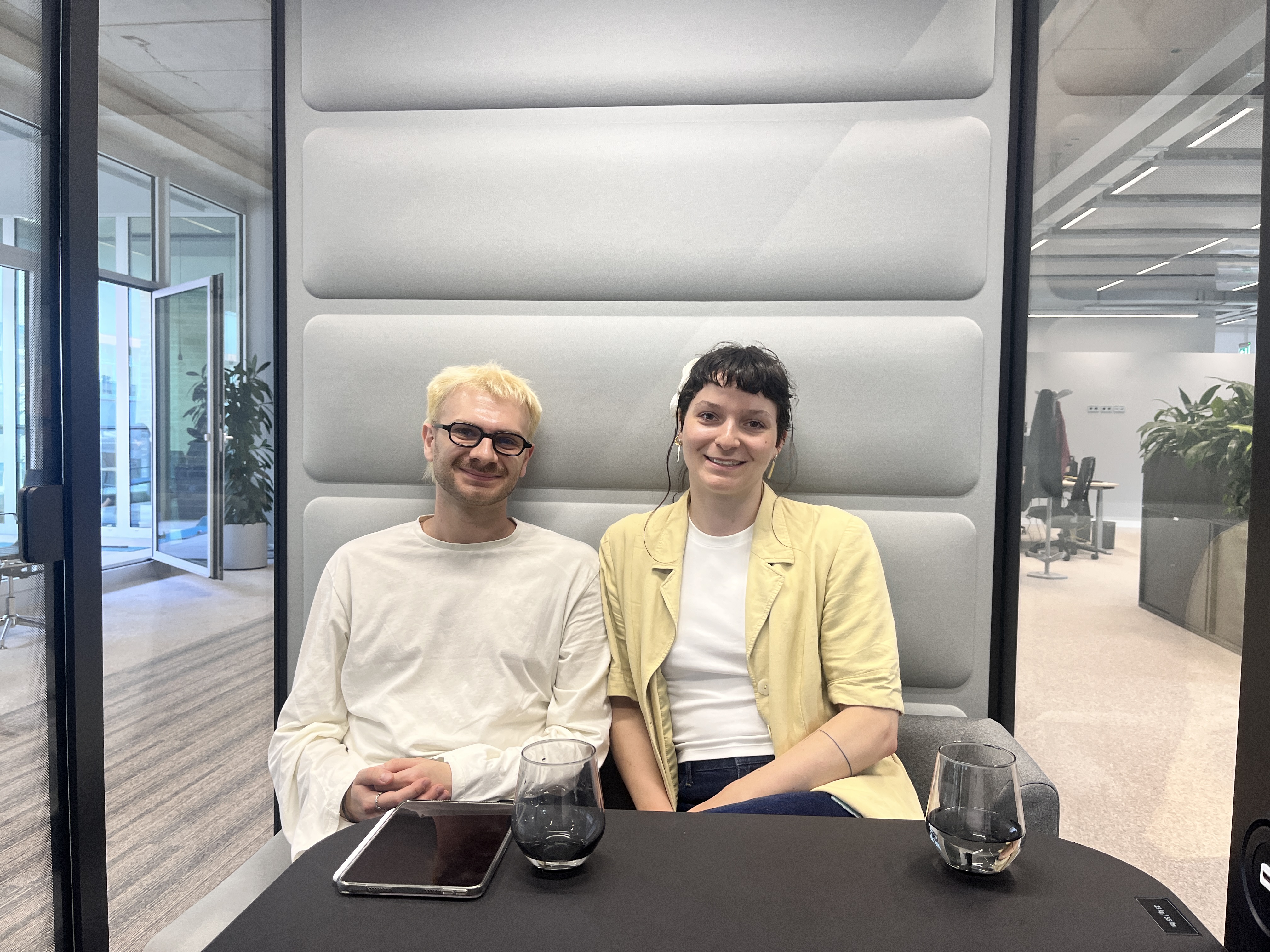
Looking for his next challenge, Kukan AI's co-founder Gerrit discovered 3DGS (3D Gaussian Splatting) through reading an INRIA paper. Then, as any resourceful founder does, he went looking for experts to help him build his product with co-founder Eddie. Via LinkedIn, he found two experts in 3DGS, Brianne & Niccolò, who happened to sit next to each other in the Vision and Imagaing department at Fraunhofer HHI, in the IMC group!
Separately, Gerrit met Silicon Allee’s co-founder, Travis, at an event in Berlin. Travis told him about the venture lab he runs at Fraunhofer HHI and that he was looking for 3DGS startups. “I nearly spit up my coffee!” Gerrit told me.
Gerrit told Travis that he was building a 3DGS startup with co-founder Eddie, and had two ex-Fraunhofer HHI researchers they wanted to hire. “You could say it was a serendipitous series of events.”
What does Kukan AI do?
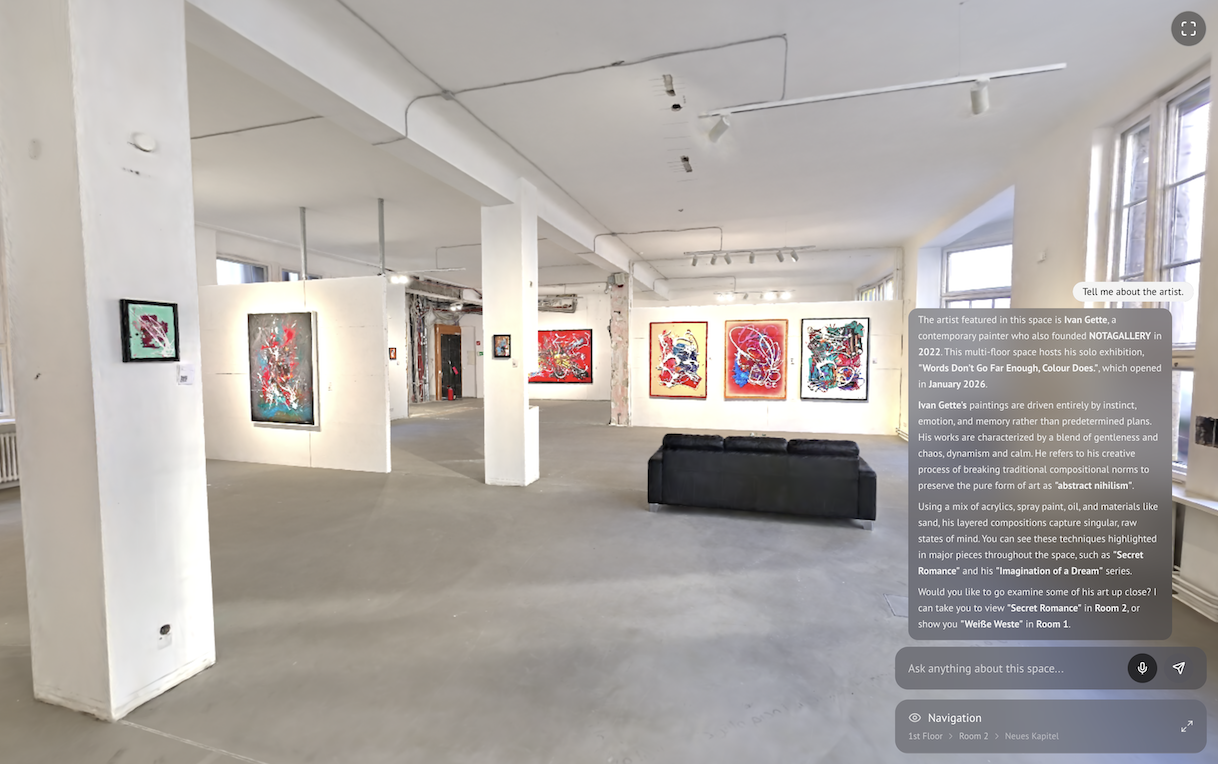
Kukan AI turns physical spaces into interactive 3D tours for businesses that need people to experience a place without physically being there, this could be for real estate listings, offices, galleries, event venues.
The space is captured on camera and processed using Gaussian splatting, a computer vision technology that reconstructs scenes as photorealistic, navigable 3D environments with real-time rendering and accurate light behaviour. Visitors can then explore the space on any device, from anywhere in the world.
Right place, right time
Brianne and Niccolò are Founding Computer Vision Research Engineers at Kukan AI. They both joined Fraunhofer HHI in 2023 as student researchers.
Brianne’s focus was on dynamic 3D reconstruction of humans for VR experiences, she worked with data from Fraunhofer HHI's specialised multi-camera studio, using Gaussian splatting to create realistic, moving human models. Niccolò focused on 3D scene understanding, i.e. teaching systems to automatically identify objects in a space and map the relationships between them. He worked with NeRF and Gaussian splatting. Both co-authored research papers during their time at Fraunhofer HHI, Brianne on AT-GS and Niccolò on SPNeRF.
When their student contracts ended, they didn’t have a clear path forward. Gaussian splatting roles in Europe were scarce.
"The jobs I found weren't Gaussian splatting related," says Brianne. "If I wanted that, I'd probably have had to go to the US."
That’s when Gerrit reached out!
From researchers to startup team
Brianne and Niccolò were able to transfer from being researchers to founding members of Kukan AI in the same building!
Silicon Allee is the venture lab embedded within Fraunhofer HHI. Gerrit and Eddie applied with Kukan AI and got accepted. As part of the 12-month program, the core team are hired as full-time Fraunhofer HHI employees, with salaries covered for up to two years, and get access to Fraunhofer HHI's research infrastructure, labs, specialists, and technical IP. So, for Brianne and Niccolò, it meant the transition was about as frictionless as a career change gets. Same building, same access card, just one floor down. 😎
"In a startup, you don’t always know how things will go, but Silicon Allee gives a safety net, that's a lot of value," says Niccolò.
Fraunhofer HHI research builds live product features
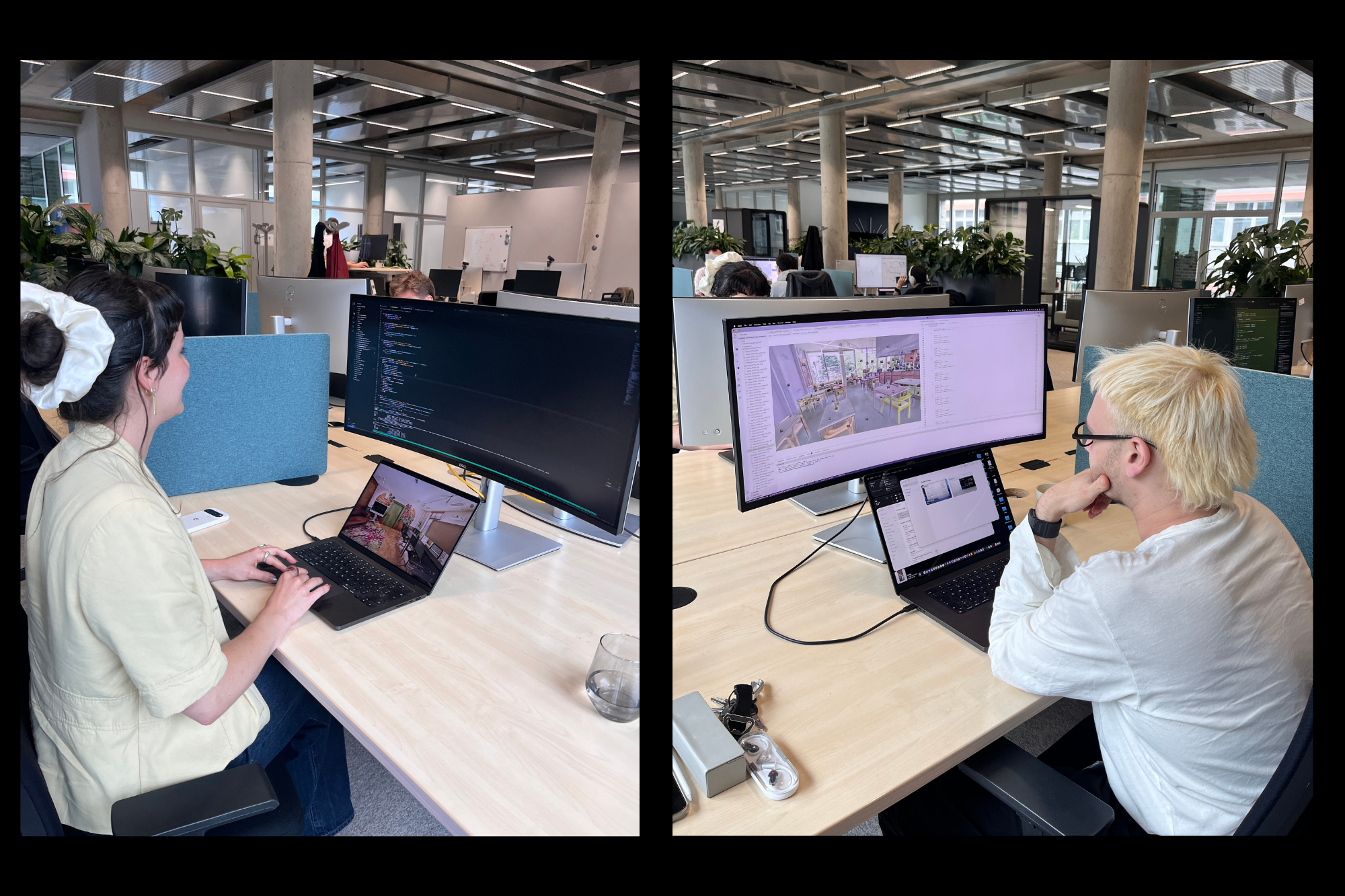
Niccolò's scene understanding pipeline comes directly from his Fraunhofer HHI research and feeds straight into the product. He's now extending it into measurement features like distances, dimensions, and how many people fit in a space so that potential customers browsing a property or venue online can get key information without a physical visit.
Brianne is working on getting high-quality Gaussian splats from a standard phone camera. Right now Kukan AI needs specialist hardware to capture spaces. If her research lands, anyone with a phone could do it.
They've also integrated SOG (Self-Organising Gaussians), a compression algorithm built on research by their former Fraunhofer HHI colleagues, enabling 42x compression and progressive streaming.
"I don't think any other startup out there has the optimisation we have now," says Niccolò.
Having two Fraunhofer HHI researchers building the product means Kukan AI's technology is grounded in years of academic research, published work, and access to Fraunhofer IP. The result is a more technically advanced product than a team without that background could build, and one that is significantly harder for competitors to replicate.
---
If you are a researcher at Fraunhofer HHI or an external startup building in one of our research areas (one of our CORE topics OR find your relevant research using the paper pulse tool), our venture lab could be a great next step for your startup! Find out more and apply!


%201.svg)